
Verandah permits
A verandah is a roofed structure, usually attached to the house, and in both Victoria and Queensland it almost always needs a building permit. Here is what decides it and what tends to go wrong.
Last reviewed 2 October 2026
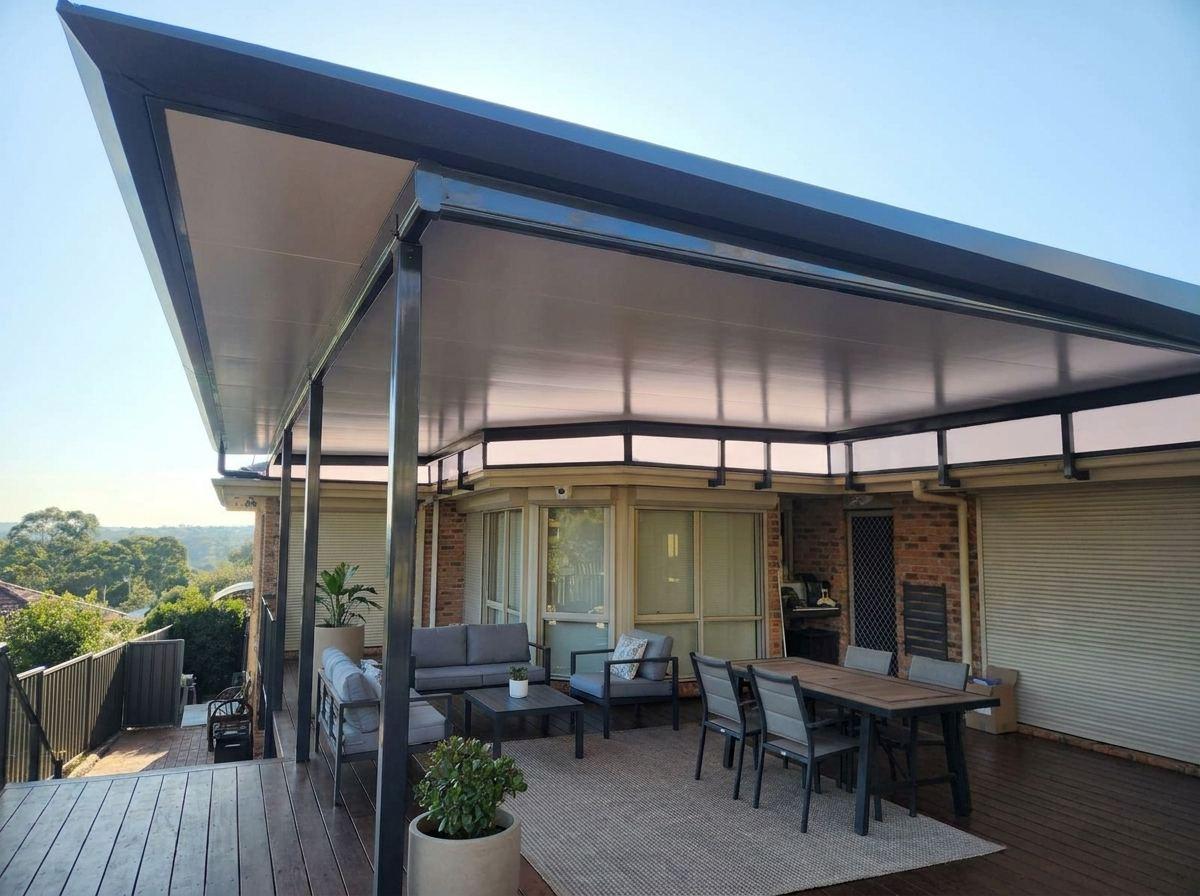
What counts as a verandah?
For permit purposes, a verandah is a structure with a roof, usually attached to the house and open on at least one side. The roof material doesn't matter. Colorbond, polycarbonate, glass and opening louvre roofs all count. If it has a roof and connects to your house, assume it is a verandah.
That is the key difference from a pergola. An open pergola with no roof can be exempt from a permit within certain limits. Add a roof, even a retractable one, and it is generally treated as a verandah. Our pergola vs verandah guide covers this in detail.
When it needs a permit
In Victoria, the exemptions in Schedule 3 of the Building Regulations 2018 are narrow, and an attached roofed verandah usually falls outside them. Expect to need a building permit. See verandah permits in Victoria.
In Queensland, only very small, low class 10 structures are accepted building work. A typical verandah or patio cover needs building approval from a certifier. See approvals in Queensland.
In both states, a permit can also be triggered or complicated by overlays, easements and boundary rules, so it is worth checking the specific address. Run the free check to see what is likely to apply on your block.
Problems we see most often
Too high near the boundary. The allowed distance from a side or rear fence generally grows with height. A skillion roof that rises toward the fence is a common cause of a failed check. Lowering the high side or flipping the fall often fixes it.
Too much of the block covered. Site coverage limits apply to all roofed areas, including the house. A large verandah on a small block can push the total over the limit.
Building over an easement. Many backyards have a drainage or sewer easement along the rear fence. Building over it needs the consent of the authority that owns it. Read can I build over an easement?
Heritage and other overlays. In a heritage or character area, a verandah visible from the street may need planning approval as well as a building permit.
Engineering that doesn't match the site. The structure must be engineered for your site's wind conditions. Kit suppliers usually provide this for their standard designs, but check it matches your address.
Before you buy a verandah kit
A few checks before you sign a quote can save weeks later:
- Measure from the fence. Note the distance from the nearest side or rear boundary to where the verandah's edge and highest point will be.
- Decide the roof shape early. Skillion, flat, gable and fly-over roofs have different heights at the boundary, and height is often what decides compliance.
- Look for easements. Your title plan shows any easements. If the verandah will cross one, consent is needed before a permit can issue.
- Ask for the engineering. Check your supplier will provide engineering for your site's wind conditions, and that it covers the connection to your house.
- Check overlays. Heritage, character, bushfire and flood overlays can all add requirements.
What to send us
Your quote or kit plans, photos of where the verandah will go (including the nearest fence), the site address and any engineering your builder or supplier has provided. If something is missing, we'll tell you.
Cost and time
The permit package for your state covers the building surveyor or certifier and the mandatory inspections. You can see what's included on the Victoria and Queensland pages. Extra approvals, such as council consent or a planning permit, are quoted up front and only go ahead with your agreement.
Most verandah permits are straightforward once the design is right. Allow extra time if council consent or a planning permit is needed.
How we help
We check the address, prepare the site plan, use your builder's or kit supplier's engineering, quote any extra approvals and lodge everything with a licensed building surveyor or certifier. You pay only when your permit is ready to issue.
Rules and prices in your state
Common questions
My verandah is small. Does it still need a permit?
Usually, yes. The exemptions for small structures are aimed at freestanding sheds and open pergolas. A roofed verandah attached to the house generally needs a permit whatever its size.
Does an enclosed verandah or outdoor room need anything extra?
Enclosing a verandah with walls, glazing or screens can change how it is classified and what rules apply. Tell us what you plan to enclose and we'll make sure the application covers it.
Can the verandah go right up to the boundary fence?
Sometimes. Both states allow some structures close to a boundary within height and length limits. If yours is over those limits, it can need council consent or a redesign. Structures close to a boundary may also need fire-resisting construction or a fire engineering assessment, which adds cost, so keeping about 1 m from the boundary is the simplest path.
Official sources
This page is general information, not advice for your property. Your building surveyor (a certifier in Queensland) confirms the exact requirements for your site.
Ready when you are.
Two minutes online, then we take it from there. Nothing to pay until your permit is ready.